The American garage is one of the largest rooms in the house, and in most homes, it’s the one with the worst return on investment. It’s the land of forgotten bicycles, teetering towers of storage bins, and the ghosts of past projects. For many, the idea of fitting one car—let alone two—inside is a distant dream. The garage has become a “junk drawer” with a 400-square-foot footprint.
But it doesn’t have to be this way.
This space, so often surrendered to chaos, is your home’s most flexible asset. It’s the only room designed to withstand cars, chemicals, and projects. It’s the bridge between your interior and exterior life. The problem isn’t the space; it’s the vision. We’ve been taught a false choice: a garage is either for parking or for storage or for a workshop.
The reality is that you can have it all. You can park your cars, store your essentials, pursue your passions, and create a new center for family recreation. The key is to stop seeing it as a single-use room and start treating it as a dynamic, multi-zoned command center. This guide is your blueprint for reclaiming that space, not for one purpose, but for all of them.
The Philosophy: From Dumping Ground to ‘Flex Space’
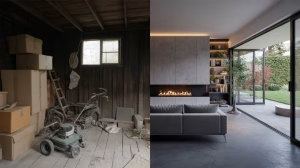
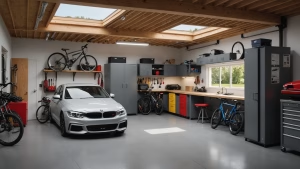
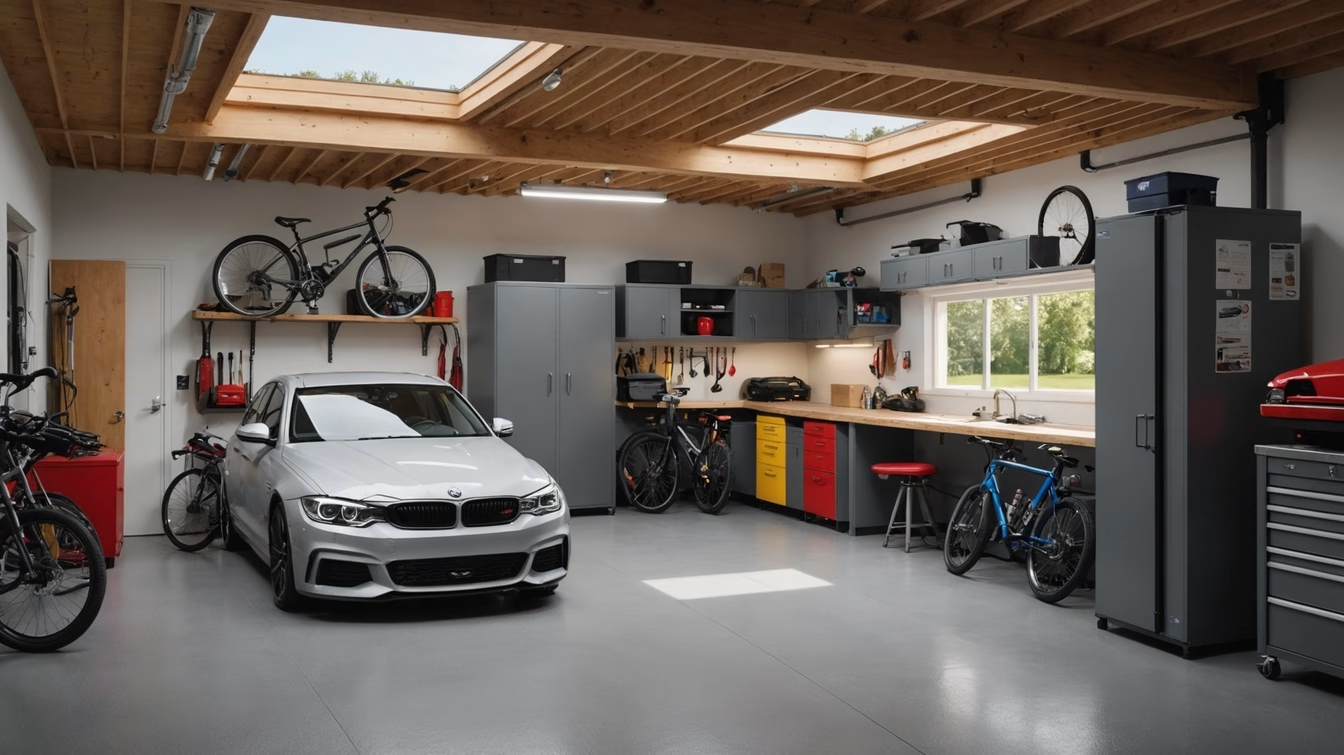
Imagine this: A “before and after” shot. The “before” is a dark garage, cluttered with items on the floor. The “after” is the same garage, brightly lit, with a car parked inside, bikes hanging on the wall, and a clean, open area in the center.
Why settle for a single-function space? A home addition can cost tens of thousands of dollars, yet most of us have 400 to 600 square feet of potential sitting just on the other side of the kitchen door.
Creating a multi-function garage is the ultimate “work smarter, not harder” home improvement project. It’s about maximizing the square footage you already own. A well-designed, flexible garage adds immense value to your home. In a world where “flex space” and “home offices” are a priority, a garage that is more than just a car-park is a massive selling point.
More importantly, it adds value to your life. It gives the mechanic a place to tinker without sacrificing the family’s parking. It gives the kids a place to play on a rainy day, and it gives the fitness enthusiast a gym just 30 seconds from the bedroom. This isn’t about compromise; it’s about integration.
The Blueprint: Your Master Plan of Zones
You cannot build a functional multi-use space by accident. The number one mistake is buying shelves, then a workbench, then a treadmill, and trying to make them fit. This “bottom-up” approach leads to the chaos you have now.
You must start with a “top-down” plan. This is the zoning phase.
- Measure Everything: Get a tape measure. Get graph paper. Get the exact dimensions of your garage, including ceiling height. Note the location of outlets, light switches, the garage door opener, and any windows.
- Define Your “Non-Negotiables”: Be brutally honest. Do you really need to park two cars inside? Or is one enough? Does the 30-year-old freezer have to live here? List the items and functions that are 100% required.
- Map the X-Axis (The Floor): The floor is your most valuable and contested real estate. This is where the primary functions will fight for dominance. Your car’s footprint is massive and inflexible. This is the first thing you must “draw” onto your map. A typical car or SUV needs about 10 feet of width (including opening doors) and 18-20 feet of length.
- Map the Y-Axis (The Vertical Space): This is the secret. This is where you find all the “new” space. Your walls and your ceiling are your storage saviors. The average garage has over 1,000 square feet of wall and ceiling space, most of it completely unused.
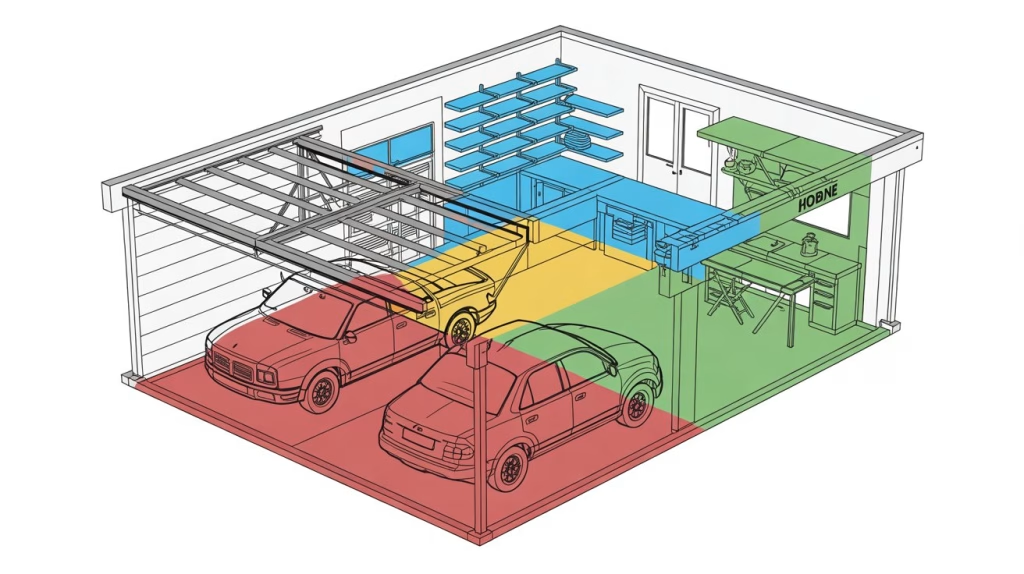
- Create Your Zones:
- Parking Zone(s): The lanes for your vehicles. These must be kept clear.
- Storage Zone(s): Primarily vertical. This includes deep, long-term storage (ceiling) and active, daily-use storage (walls).
- Hobby Zone(s): This is your project area. It’s often a corner or the front wall, anchored by a workbench.
- Recreation Zone(s): This is your “flex” space. It’s often the area in front of a parked car or the “empty” bay in a two-car garage.
This plan is your single source of truth. Do not buy a single hook until the plan is complete.
Pillar 1: Protecting the Car (Parking)
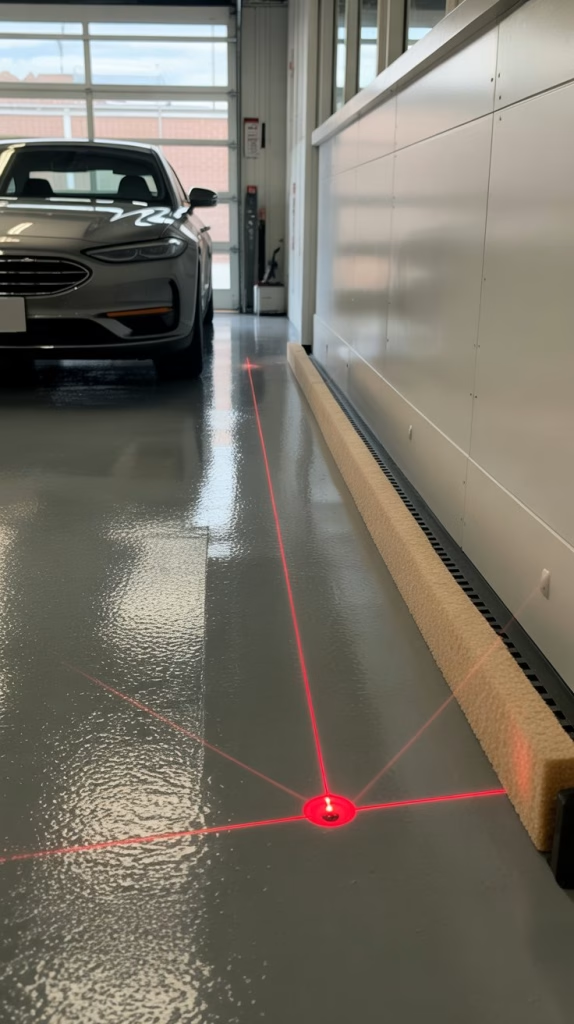
For most, this is the original and most contentious purpose. A car is a massive, wet, dirty object. Making it coexist with a gym and a workshop requires clear rules.
- Rule 1: The Floor Must Be Clear. This is the foundation of multi-use. If you have to move a bicycle, three boxes, and a basketball to park your car, you will stop parking your car in the garage. This is why the “Storage” pillar is so critical.
- Rule 2: Guide Your Landing. Parking perfectly every time is essential. The “hanging tennis ball” is a classic for a reason. For a high-tech solution, install a ceiling-mounted laser guide that projects a dot onto your dashboard. When the dot hits a pre-determined spot, you’re in the perfect position.
- Rule 3: Protect Your Assets. The garage is a “work” area, but your car is a valuable asset.
- Door Guards: Mount simple foam or rubber strips to the wall where your car door opens. This small act prevents a hundred moments of “door-ding” frustration.
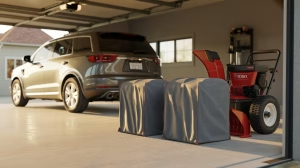
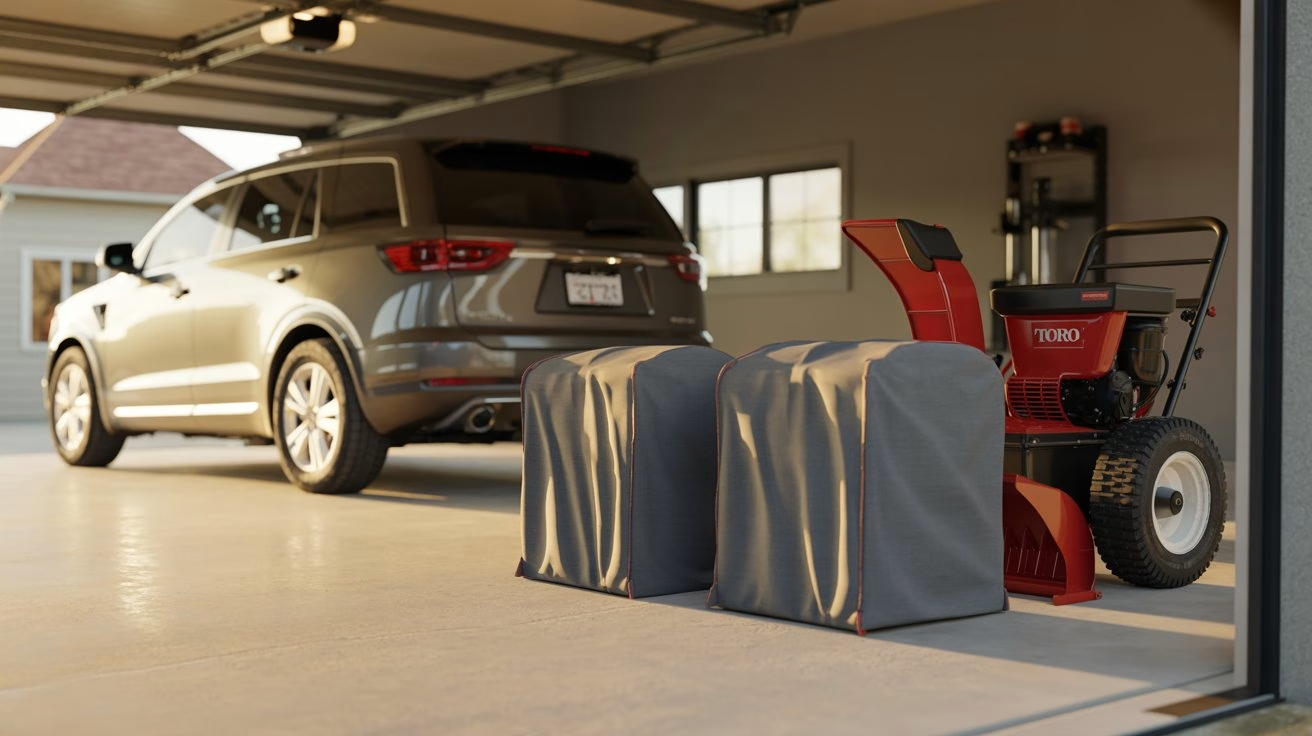
- Car Covers: If your hobby zone is a woodworking shop, a breathable car cover is a non-negotiable. Sawdust is abrasive and will ruin your car’s finish. A cover protects your car and gives you the freedom to make a mess.
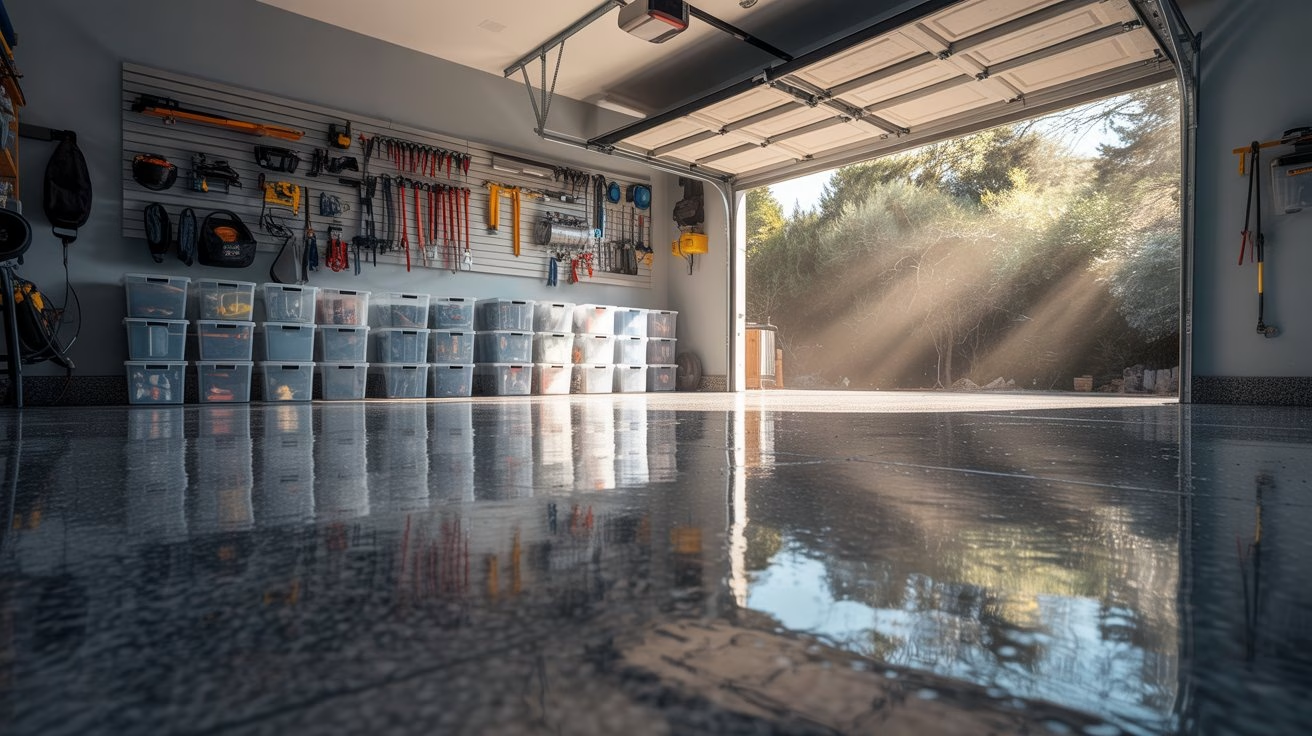
- Flooring Matters: Bare concrete is dusty and porous. A high-quality floor coating (like epoxy or polyaspartic) or interlocking tiles (like Swisstrax) does more than look good. It creates a unified, easy-to-clean surface that defines the parking zone. It turns the floor from a “slab” into a “finish,” mentally elevating the entire space.
Pillar 2: Conquering the Clutter (Storage)
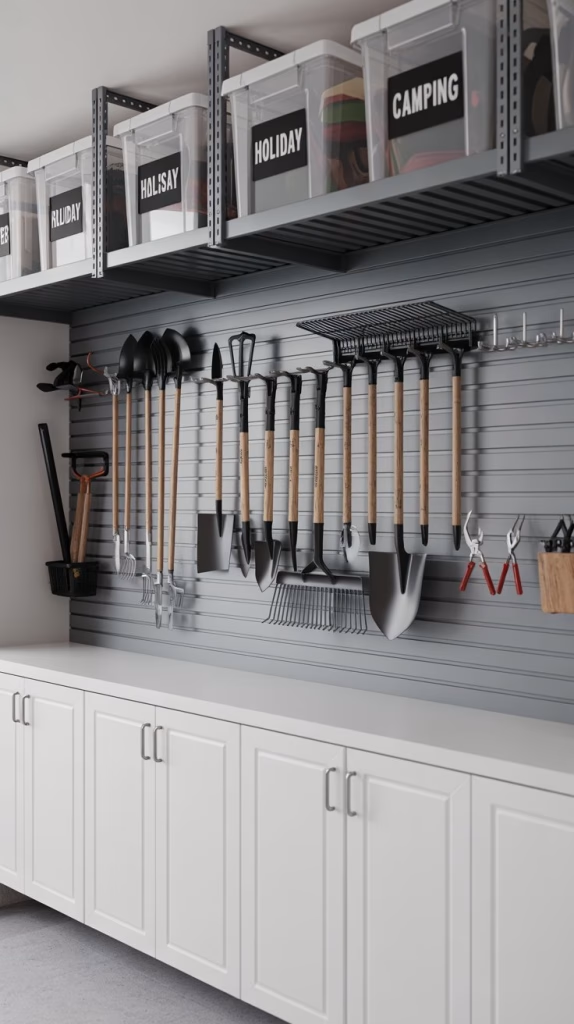
Storage is not a function; it is the enabler of all other functions. Your hobby, recreation, and parking zones are only possible if your “stuff” is contained. The goal is to get 100% of your items off the floor.
This requires a “storage-in-depth” strategy, using every available surface.
- Level 1: Deep Storage (The Ceiling) Your ceiling is your “attic.” It’s the perfect place for items you access 2-4 times per year: holiday decorations, seasonal clothing, camping gear, and family archives.
- Overhead Racks: These are 4’x8′ steel platforms that bolt into your ceiling joists. They are incredibly strong and can hold hundreds of pounds. By placing these above the travel path of your garage door, you reclaim a massive amount of “dead” air space.
- Level 2: Active Storage (The “High” Walls) This is the area of your walls from 4 feet high up to the ceiling. It’s for items you need, but not every day.
- Cabinets: This is the single best way to reduce “visual clutter.” A wall of uniform cabinets, even if they are filled with random items, gives the garage a clean, finished look. This is where you store car-care chemicals, paint, and project supplies.
- Shelving: Less expensive than cabinets, open shelving is great for clear bins. The key is uniformity. Buy 20 of the same clear bin. It creates a system, not a jumble.
- Level 3: Utility Storage (The “Low” Walls) This is the “prime real estate” wall space, from the floor up to about shoulder-height. It’s for items you use frequently.
- Slatwall & Pegboard: These systems are the champions of flexibility. A Slatwall system with dedicated hooks, baskets, and shelves allows you to store anything, from a rake to a screwdriver, in a specific, accessible spot.
- Specialty Racks: Don’t just lean it; rack it. Get a dedicated wall-mounted rack for your garden tools (shovels, rakes). Get a track system for your bicycles. Get a wall mount for your wheelbarrow.
- Level 4: Mobile Storage
- Tool Chests: A rolling tool chest is the heart of a hobby zone.
- Carts: A 3-tier rolling cart can be a detailing cart, a gardening cart, or a project cart.
This multi-layered approach is the key. As Consumer Reports notes in their guide to garage organization, “The best way to free up floor space is to make the most of your garage’s walls and ceiling.” A combination of cabinets for hiding clutter and Slatwall for easy access is the professional’s choice.
Pillar 3: The Passion Zone (Hobby)
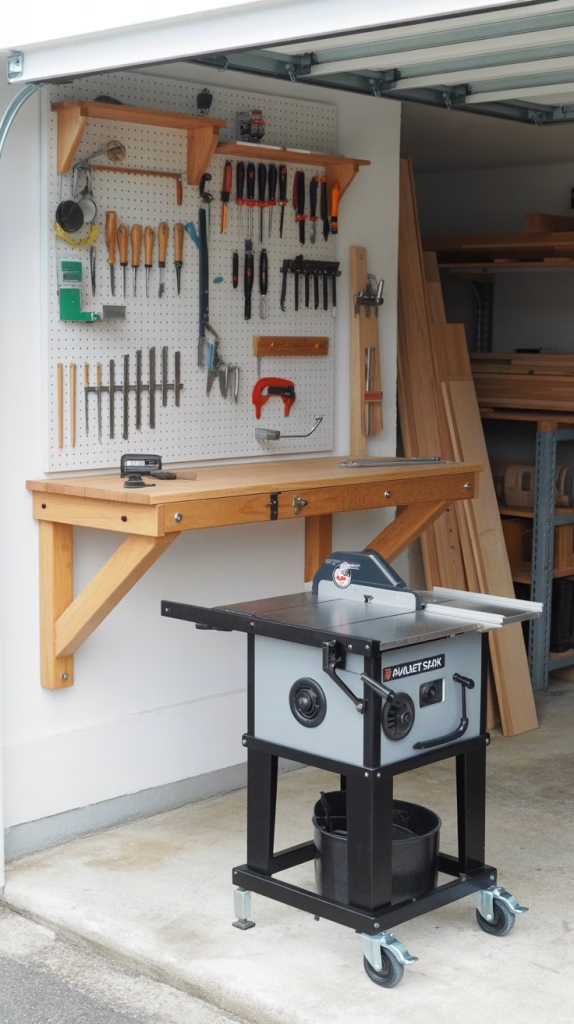
This is the “why” for many people. The hobby zone is where you create, repair, and tinker. But this zone is often the “messiest” and must be carefully integrated to protect your other zones (especially parking).
- The Anchor: The Workbench Every hobby needs a home base. The best solution for a multi-use space is a fold-down workbench. When not in use, it folds flat against the wall, giving you back 8 feet of floor space. When you’re ready to work, it provides a stable, full-sized surface.
- Go Mobile: The “Roll-Away” Workshop Your hobby zone can’t own the floor 24/7. The solution? Put your hobby on wheels. Every large tool—table saw, miter saw stand, drill press—must be on a mobile base. This allows you to roll your “shop” into the center of the garage for a project, and then roll it all back into a 4×4-foot corner when you’re done.
- Specialized Hobby Zones:
- The Woodworker: Your main enemies are dust and space. Mobile bases solve for space. Dust collection solves for the mess. A shop vacuum with a cyclone separator is the bare minimum. This system is critical for preventing sawdust from “contaminating” your car’s paint or your home gym.
- The Auto Detailer/Mechanic: Your zone is the parking zone. Your infrastructure is key. Wall-mounted reels for your pressure washer hose, air compressor line, and extension cord are transformative. A rolling detailing cart holds all your bottles and polishers, so you aren’t running back and forth to a cabinet.
- The Gardener: A small, dedicated “potting station” (either a small bench or a rolling cart) in a corner near the garage door is all you need. Combine it with wall-mounted tool racks for your rakes and shovels, and your gardening “hub” is complete, contained, and won’t spread dirt everywhere.
Pillar 4: The ‘Flex’ Space (Recreation)

This is the newest and most exciting function: turning your garage into living space. This is where you work out, where the kids play, or where you relax. This function is 100% dependent on one thing: environment.
- The Foundation: Comfort You will not work out, and your kids will not play, in a 110-degree oven or a 30-degree icebox. Before you buy a single dumbbell, you must address:
- Insulation: The walls and ceiling must be insulated. If they aren’t, this is your first, most important job.
- The Door: The garage door is the “forgotten wall.” A single-layer steel door is a thermal disaster. An insulated garage door (with an R-value of 10 or higher) is a non-negotiable for a recreation space.
- Climate Control: The ultimate enabler is a ductless mini-split. This is a high-efficiency heater and air conditioner in one. It’s quiet, powerful, and will keep your garage at a perfect 70 degrees year-round. As the U.S. Department of Energy points out, properly insulating and air-sealing the garage is a critical first step before adding any heating or cooling system to ensure efficiency.
- The ‘Fold-Away’ Home Gym You don’t need a dedicated room. You need dedicated equipment.
- The Rack: A foldable squat rack mounts to your wall studs. When you’re done, it folds flat, taking up only 5 inches of space.
- The Weights: A single set of adjustable dumbbells (like PowerBlocks or Nüobells) replaces 30 pairs of regular dumbbells.
- The Cardio: Choose equipment with a small or vertical-storage footprint. A Concept2 Rower stores vertically. An air bike has a small footprint.
- The Floor: Define your gym zone with 3/4-inch-thick rubber stall mats. This protects your concrete and your equipment.
- The Entertainment Zone
- The Screen: A wall-mounted, durable smart TV is an easy add. For a truly “multi-use” solution, buy a projector. When the garage door is down, the white, flat surface becomes a 150-inch movie screen.
- The Space: This is the ultimate rainy-day play area for kids. The durable floor and “indoor-outdoor” nature make it perfect for roller-skating, art projects, or a dartboard.
Tying It All Together: The 4 ‘Enablers’
You can have the best plan in the world, but it will fail without the right infrastructure. These four “enablers” make all the zones work together.
- Lighting: You cannot have zones if you cannot see. Ditch the 60-watt “bug light.” Your goal is to flood the entire space with bright, even light. The standard is 4-foot LED shop lights, rated for 5000K (“Daylight”). A standard two-car garage should have at least six to eight of them.
- Power: Your 1980s garage with two outlets is not enough. You’ll need an outlet for the gym TV, a dedicated circuit for the workbench tools, an outlet for the battery chargers, and power for the second freezer. A licensed electrician can add new outlets or, ideally, install a subpanel in the garage, giving you all the power you’ll ever need.
- Water: The single most underrated garage upgrade is a utility sink. A deep, rugged “slop sink” is a game-changer for your hobbies (washing paintbrushes), your recreation (filling water bottles), and your storage (hand-washing).
- Flooring (Again): This is so important it’s worth a second mention. A unified, sealed floor physically and mentally connects all the zones. It’s the canvas upon which you build your masterpiece.
The Final Word
Your garage is a promise. It’s a promise of “one day” projects, “one day” workouts, and “one day” organization. By applying a strategy of zones, vertical storage, and smart infrastructure, you can cash in on that promise.
You don’t have to choose between parking your car and pursuing your passion. You don’t have to give up a workshop for a home gym. This is the one space in your home that is rugged enough and large enough to be all things at once. Stop seeing it as a box for your car, and start seeing it as the most powerful and flexible room in your home.
Frequently Asked Questions (FAQ)
Q: How do I handle the sawdust from my workshop getting on my gym equipment and car? A: This is a key “contamination” issue. The solution is multi-faceted. First, a high-quality dust collection system (a shop vac with a cyclone separator) is a must. Second, your most sensitive items (car, treadmill) should be covered when you are doing “dirty” work. Third, a wall-mounted fan or an air filtration unit can help capture airborne particles.
Q: What is the most important first step in a multi-function garage project? A: The “Great Purge,” followed by planning. You cannot organize clutter. You must get rid of what you don’t need. Sell it, donate it, or trash it. Only after you have culled your belongings can you create a realistic “zoning” plan for what’s left.
Q: Can I really park two cars and have a gym and a workshop? A: Yes, but with compromises. It requires a two-car garage, ruthless organization, and “fold-away” or “roll-away” equipment. Your workbench must fold flat. Your power rack must fold flat. Your large tools must roll into a corner. Your storage must be 100% on the walls and ceiling. It’s tight, but with a good plan, it is absolutely possible.
Q: I have a freezer and a second refrigerator in my garage. How do I plan around them? A: Treat them as “non-negotiable” items, just like your car. They must be in your initial plan. The best place for them is along a wall, consolidated into a “utility” zone, preferably near the door to your house. Build your cabinets and workbench around them.
Q: Is insulating my garage door really worth the cost? A: If you plan to use the garage for any form of recreation, it is the single most important upgrade you can make for climate control. An uninsulated door is a giant thermal “hole” in your wall. Insulating it (or replacing it with an insulated model) is the first and most effective step to keeping the space comfortable.