The Midwest Hibernation Philosophy: Why Maintenance is a Financial Strategy
For the “Weekend Warrior” in regions like Illinois, Michigan, or Minnesota, winter equipment isn’t just a set of tools; it’s a significant financial investment and a lifeline. When a February “clipper” drops ten inches of heavy, wet snow, you don’t have time to troubleshoot a gummed-up carburetor or a snapped pull-cord. You need the machine to roar to life on the first pull.
The transition from winter to spring—what we call the “Hibernation Phase”—is the most critical window for the longevity of your gear. In the Midwest, the primary enemy isn’t just wear and tear; it is the chemical warfare waged by road salt and the invisible degradation caused by modern ethanol-blended gasoline. By following an authoritative maintenance routine, you aren’t just cleaning; you are performing preventative surgery that saves you hundreds of dollars in shop fees and years of equipment life.
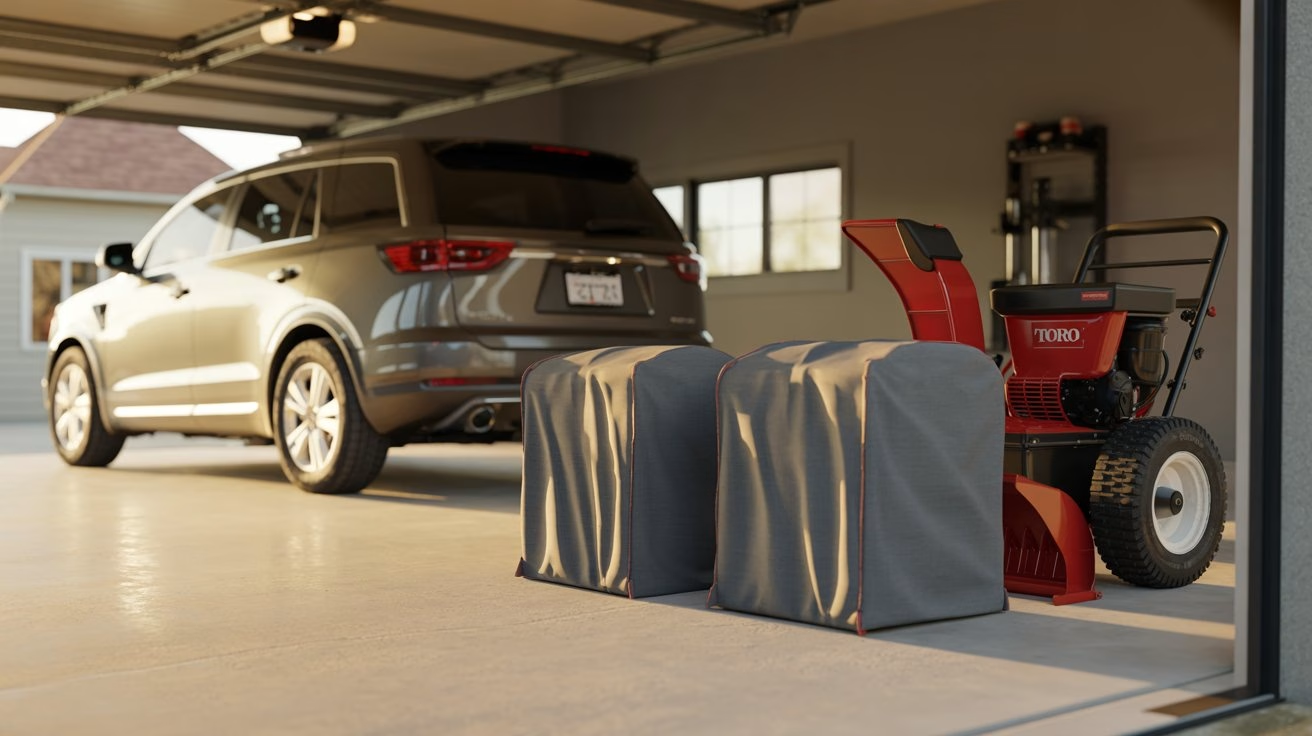
In a typical 1- or 2-car garage, space is at a premium. Letting a salt spreader sit in the middle of the floor or leaving a bulky Toro Power Max where you usually park the sedan leads to “garage friction.” This guide focuses on cleaning, mechanical preservation, and strategic spatial management to reclaim your square footage.
Imagine this: A close-up, macro shot of a dirty snowblower carburetor being cleaned. Droplets of specialized cleaner are dissolving golden-brown varnish. The background is a slightly blurred workbench with a Craftsman tool set. Professional photography, sharp focus, industrial aesthetic.
The Snowblower Command Center: Toro and Craftsman Gas Engines
Gas-powered blowers from brands like Toro and Craftsman are the workhorses of the Midwest. However, they are also the most temperamental when left to sit.
The Great Fuel Debate: Drain or Stabilize?
The single most common reason for small engine failure is “stale” gas. Modern gasoline contains ethanol, which is hygroscopic—meaning it pulls moisture out of the air. Over three months of humid Midwest summer, that moisture settles at the bottom of your tank, leading to corrosion and “varnish” that clogs the tiny passages in your carburetor.
For the Weekend Warrior, you have two paths:
- The Stabilizer Route: If your tank is mostly full, add a high-quality fuel stabilizer. Run the engine for 10 minutes to ensure the treated fuel circulates through the entire system. This is the preferred method for those who want a “quick win.”
- The Dry Route: For maximum protection, many pros suggest running the engine until it dies from lack of fuel. After it stalls, pull the starter cord a few more times to clear the remaining vapors. This prevents any liquid from sitting in the bowls.
The Oil Change: An Annual Necessity
Don’t wait until November to change the oil. Used oil contains acidic combustion byproducts. If left to sit all summer, these acids can slowly etch the internal metal components of your engine.
- Step 1: Run the engine for 5 minutes to warm the oil (warm oil flows better and carries more contaminants out).
- Step 2: Place a drain pan under the plug and release.
- Step 3: Refill with the manufacturer-recommended weight (usually 5W-30 for cold-weather engines).
The “Under the Hood” Inspection
Check your spark plug. If the electrode is blackened or brittle, replace it now. A $5 spark plug is the cheapest insurance policy you can buy. Additionally, inspect the drive belts. Look for “glazing” (a shiny, smooth appearance) or cracking. If a belt looks weary, order the replacement part today so you aren’t hunting for it during a blizzard.
Imagine this: A person in a garage applying a protective wax to the red metal housing of a Toro snowblower. A microfiber cloth is mid-swipe, revealing a high-gloss shine. The lighting is bright and airy. 4k resolution, realistic textures.
Electric Innovation: Prepping Your Snow Joe for Sleep
The rise of the Snow Joe and other electric/battery-powered gear has changed the maintenance game, but “maintenance-free” is a myth. Electric tools have unique vulnerabilities, primarily centered around their power cells and electronic controllers.
Battery Longevity (The 40/80 Rule)
Lithium-ion batteries hate extremes. You should never store a Snow Joe battery completely dead, nor should you store it at 100% charge for six months. The “sweet spot” for long-term storage is roughly 40% to 60% capacity. This maintains the chemistry without putting undue stress on the cells. Store the batteries in a climate-controlled environment—take them inside the house rather than leaving them in a garage that hits 95°F in July.
Cleaning the Contact Points
Midwest humidity can cause light oxidation on the metal terminal contacts where the battery slides into the machine. Use a dry microfiber cloth or a dedicated electronic contact cleaner to wipe these down. Ensure the battery compartment is free of any dried salt crust, which can be conductive and cause “phantom drains” on the system.
Inspecting the Plastic Auger
Unlike the steel augers on a Craftsman, Snow Joe machines often use high-impact plastics. Inspect the edges for chips or cracks sustained from hitting hidden ice chunks. If the plastic is “stress-whitening,” it may be prone to snapping next year. Smoothing out small nicks with a fine-grit sandpaper can prevent a crack from spreading.
The Salt Spreader: Defeating the “White Rust”
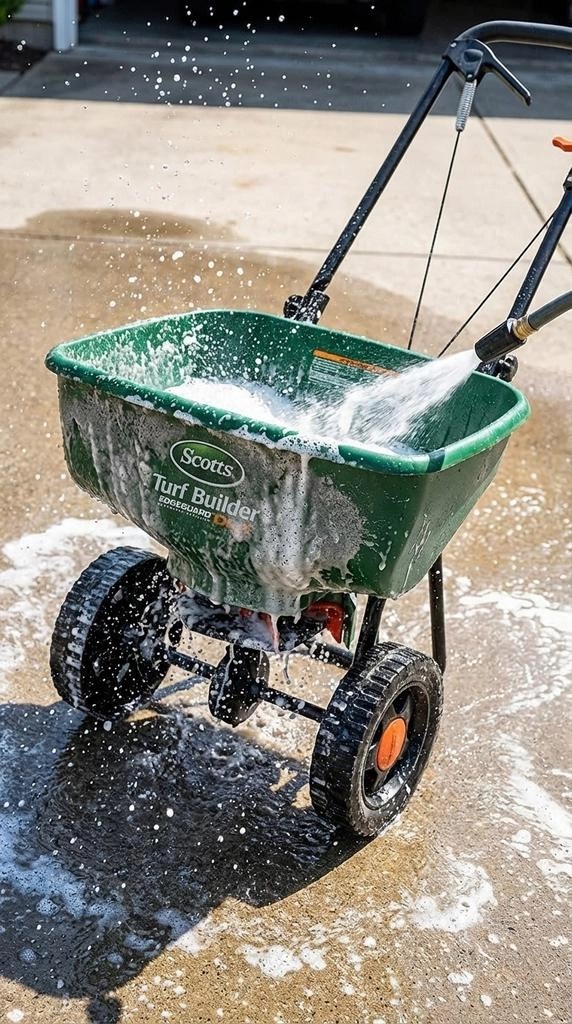
If you use a broadcast spreader for salt or ice melt, it is likely the most neglected tool in your shed. Salt is incredibly corrosive. Even “poly” (plastic) spreaders have metal axles, gears, and fasteners that will seize if not addressed.
The Deep Neutralization Wash
A simple rinse isn’t enough. You need to neutralize the salt.
- The Solution: Mix a bucket of warm water with a heavy dose of dish soap or a dedicated salt-neutralizing wash.
- The Method: Scrub the hopper, but pay special attention to the “spinner” plate and the axle. Salt dust gets into the bushings and hardens like concrete.
- The Drying Phase: This is where most people fail. After washing, you must dry the spreader completely. Use a leaf blower to blast water out of the gear housing.
Lubrication is Key
Once dry, apply a “dry” PTFE or silicone lubricant to the moving parts. Avoid heavy greases that will attract dust and grime over the summer. Move the flow-control lever back and forth to ensure the cables are coated and won’t seize in the “open” position.
Shovels and Manual Tools: The Ergonomic Refresh
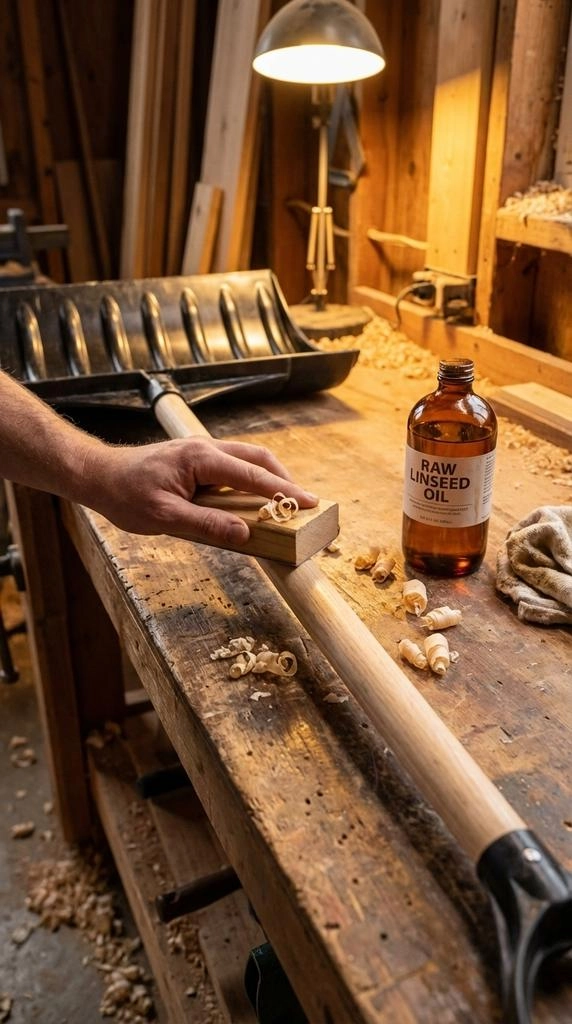
We often treat shovels as disposable, but a high-quality ergonomic shovel can last a decade with ten minutes of care.
- Blade Sharpening: Use a metal file to put a slight edge back on your steel or aluminum shovels. You don’t want it “knife-sharp,” but a squared-off edge makes it much easier to scrape through packed ice.
- Handle Care: If you have wooden-handled tools, sand down any splinters. Apply a light coat of boiled linseed oil. This prevents the wood from drying out and snapping under the weight of heavy “heart-attack” snow.
- Rust Prevention: Spray the metal blades with a light coat of silicone spray. This creates a barrier against the humid summer air.
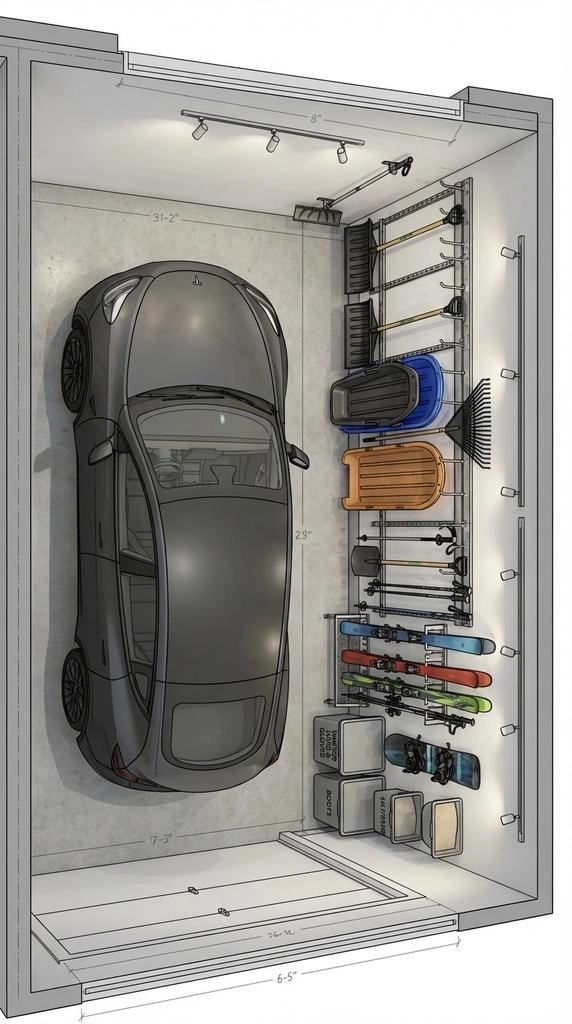
Spatial Strategy: The 1-2 Car Garage Layout
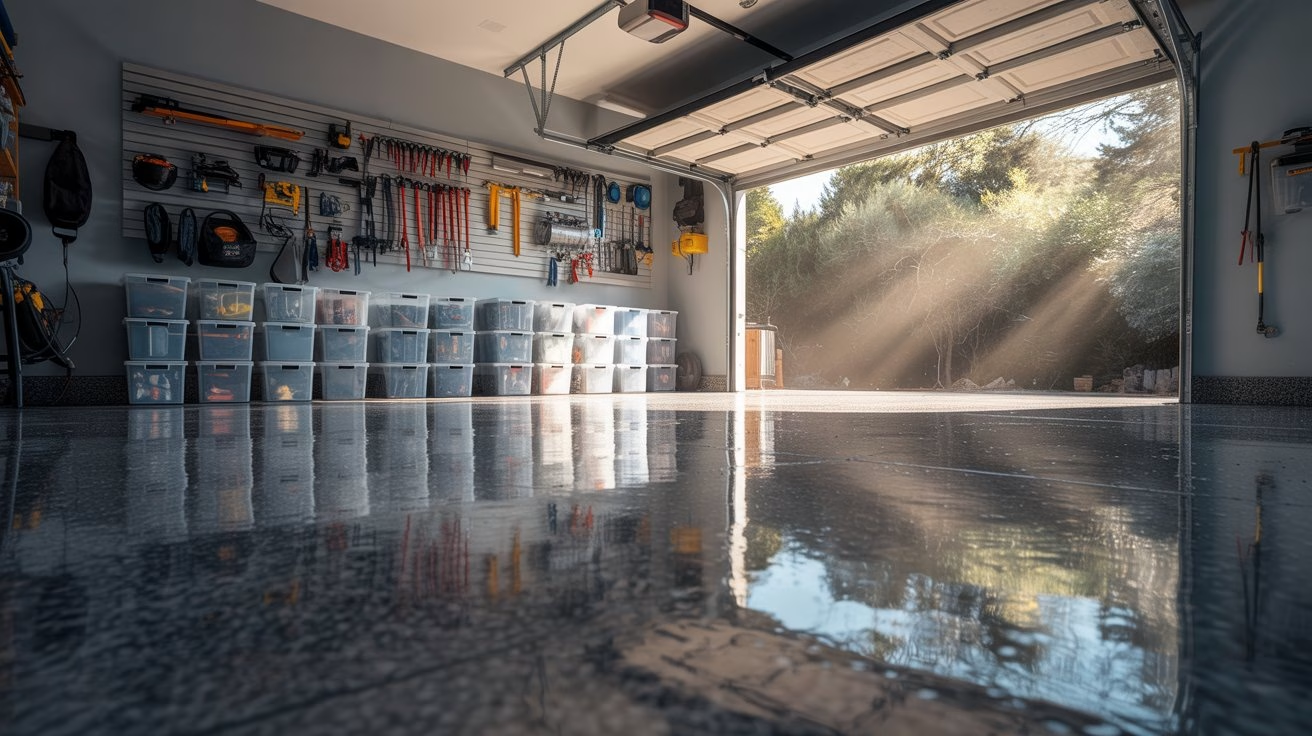
In the Midwest, the garage is a multi-purpose transition zone. During the summer, you need access to bikes, lawnmowers, and patio furniture. Your winter gear should move to the “cold storage” zones—the areas hardest to reach.
Vertical Integration
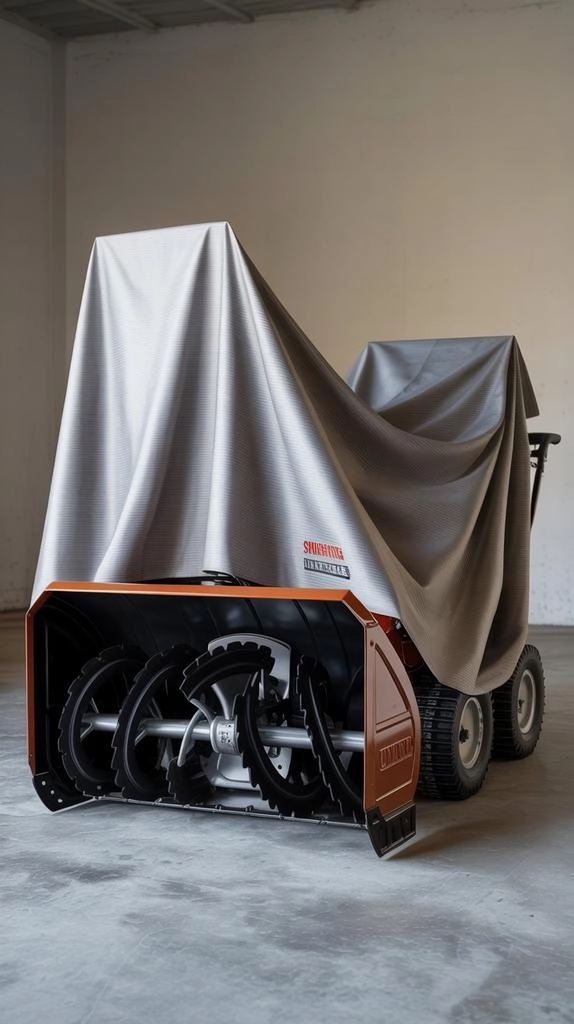
If your garage ceiling is high enough, consider heavy-duty ceiling hoists for your lighter items like shovels and the Snow Joe. For the heavy Toro, “tuck and cover” is the best strategy. Move the blower to the furthest corner of the garage, ideally behind where the lawnmower sits. Since you won’t need the blower for 6-7 months, it’s okay if it’s “blocked in.”
Pest Control (The Hidden Threat)
Mice love Midwest garages. They especially love nesting in the cozy confines of a snowblower’s engine shroud and chewing on ignition wires.
- Pro Tip: Place peppermint-oil-soaked cotton balls or commercial rodent repellent pouches near the engine and intake. Avoid mothballs, as the smell will permeate your garage and car.
Ground Clearance
Do not store your metal equipment directly on concrete. Concrete “sweats” in the summer, which can lead to rusted frames. Place your snowblower on a piece of plywood or a couple of 2x4s to allow airflow underneath.
The Pre-Season “Gift to Self”
The final step of hibernation is documentation. Take a piece of masking tape, stick it to the handle of your blower, and write: “Oil changed, fuel stabilized, ready for Dec 2026.” This simple act prevents the “Did I do that?” anxiety when the first frost hits. If you noticed a part that was starting to wear—perhaps a fraying pull-cord or a loose bolt—write it down. Better yet, order the part now.
According to the Outdoor Power Equipment Institute (OPEI), proper off-season storage is the single most effective way to extend the life of small engines. Furthermore, data from Consumer Reports suggests that the vast majority of snowblower repairs are fuel-related, making these storage steps essential for your wallet.
Frequently Asked Questions
Q: Can I just leave my snowblower outside under a tarp? A: It is highly discouraged. Tarps trap moisture underneath them, creating a “sauna effect” that accelerates rust. If you must store it outside, ensure it is on an elevated platform and use a breathable cover specifically designed for power equipment.
Q: Is “TruFuel” or engineered fuel better for storage? A: Yes. Ethanol-free engineered fuel is much more stable than pump gas. If you don’t want to mess with stabilizers, running a tank of engineered fuel through the machine before storage is an excellent alternative.
Q: My Snow Joe battery won’t charge after sitting all summer. What happened? A: Most likely, the battery underwent “deep discharge.” If stored at 0%, the voltage can drop below a safety threshold. Always store at 40-60% charge in a climate-controlled room.
Q: Do I really need to wash my shovel? A: Yes. Even plastic shovels have metal hardware and “wear strips” at the bottom. Road salt trapped in those crevices will eat the metal and weaken the plastic over time.